Real job 7 November 2026 · Land Rover Defender mild hybrid, 2023
Two batteries. One remote read.
A mild hybrid Defender after battery and converter work. One read-only session gave the garage both batteries, the charging and the emissions readiness on three pages.
Fault code
- P065B-16Generator control, circuit voltage below thresholdstored, not active
- 46.1 V48 V pack voltage at 50 % charge, with 5 mV between its cells
- 14.70 V12 V battery at 85 % charge, the converter delivering about 49 A
- 1stored fault worth watching, not active at the time of the read
The job.
A 2023 Land Rover Defender mild hybrid diesel. The battery control module had been initialised and the DC/DC converter replaced. The garage wanted to know how both batteries and the charging stood afterwards.
One read-only session.
All readings were taken remotely through a Gateway PRO with the engine at idle. Nothing was reset, cleared or changed.
What was in range.
The 12 V battery read 14.70 V at 85 % charge. The 48 V pack read 46.1 V at 50 % charge with 5 mV between cells. The converter was charging the 12 V system at about 49 A, and the fault memories of the 48 V battery and the converter were empty.
What was worth watching.
One code was stored and not active: P065B-16, generator control, circuit voltage below threshold. A low-voltage event, for example during a battery change, can set it. The report's advice: confirm the battery work history, clear the code, drive, and check that it does not return.
The battery counter.
The 12 V battery service counter showed 8 days, so the battery was most likely replaced or its monitor reset about a week earlier. That fits the six emissions readiness monitors that were still incomplete. They complete with normal driving.
What the report does not claim.
The readings were taken at idle and change with load, temperature and time since the last drive. The belt starter generator did not answer at the address tried and is not in the report.
Who did what.
- The specialist, JohnMore than twenty years in automotive electronics. Ran the session and decided what was in range and what was worth watching.
- DEXRead the battery, converter and emissions values and put the report together.
- The garageDid the battery and converter work, and received the report.
The report, all 3 pages.
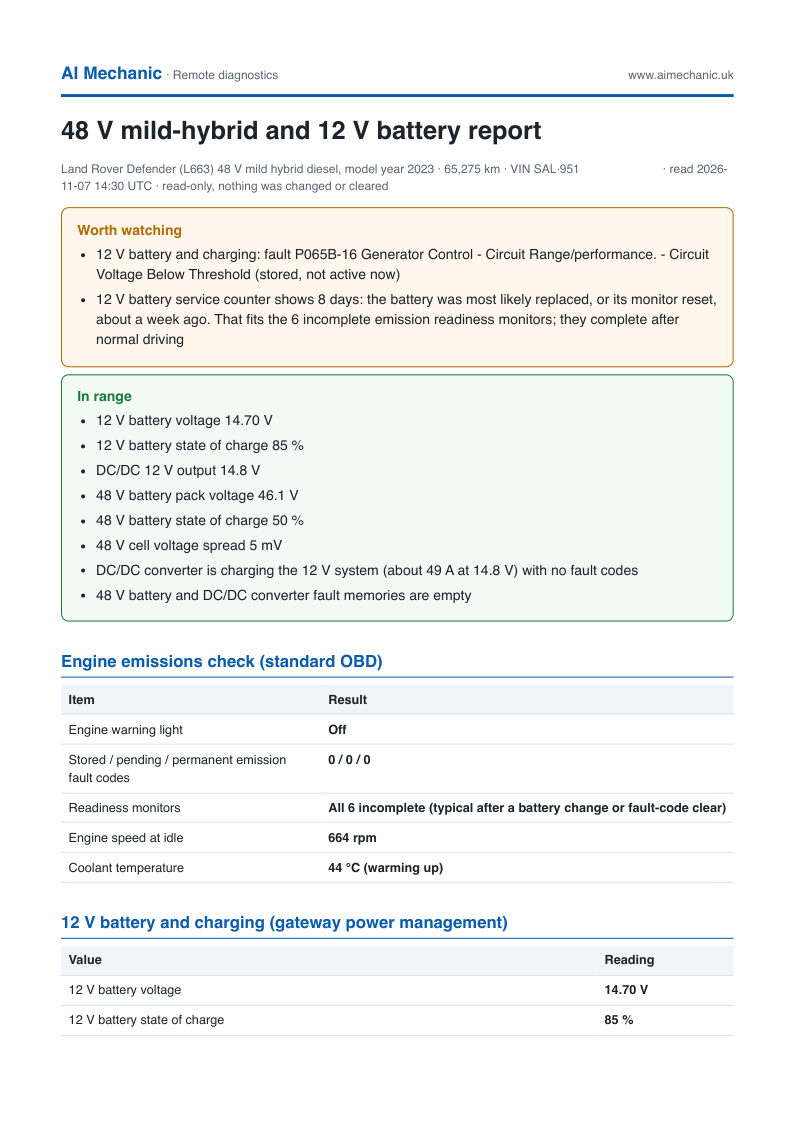
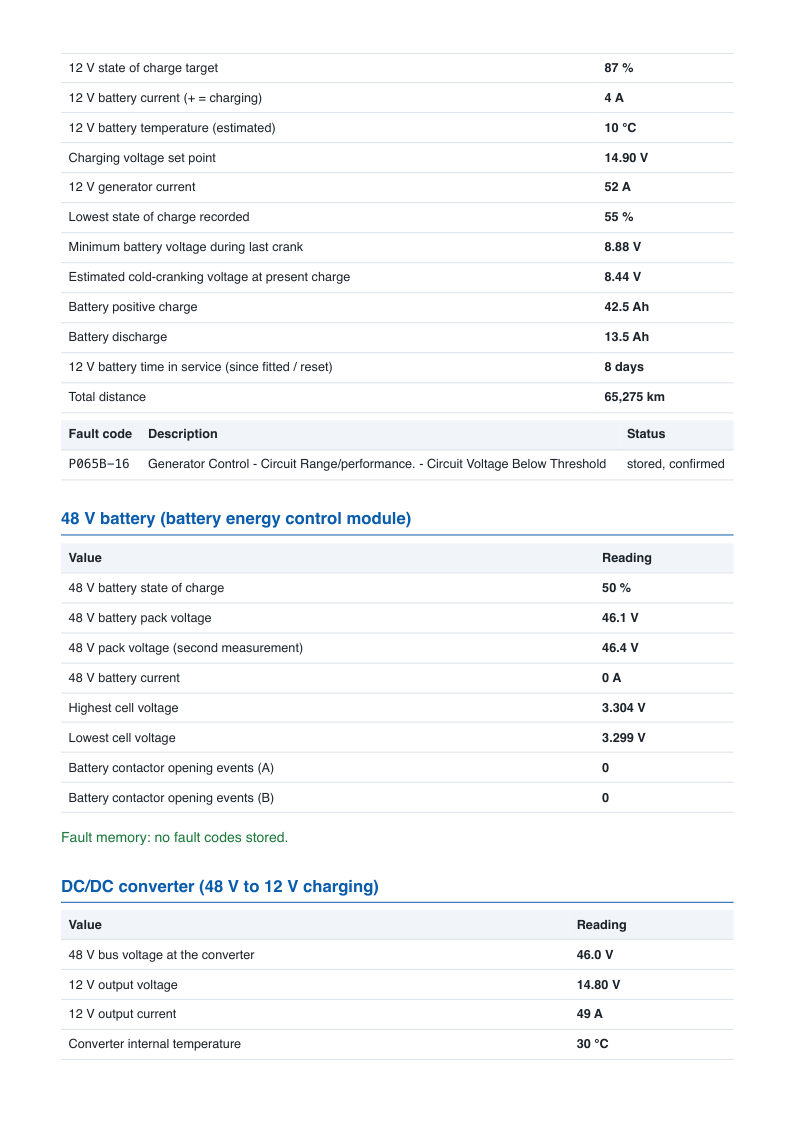
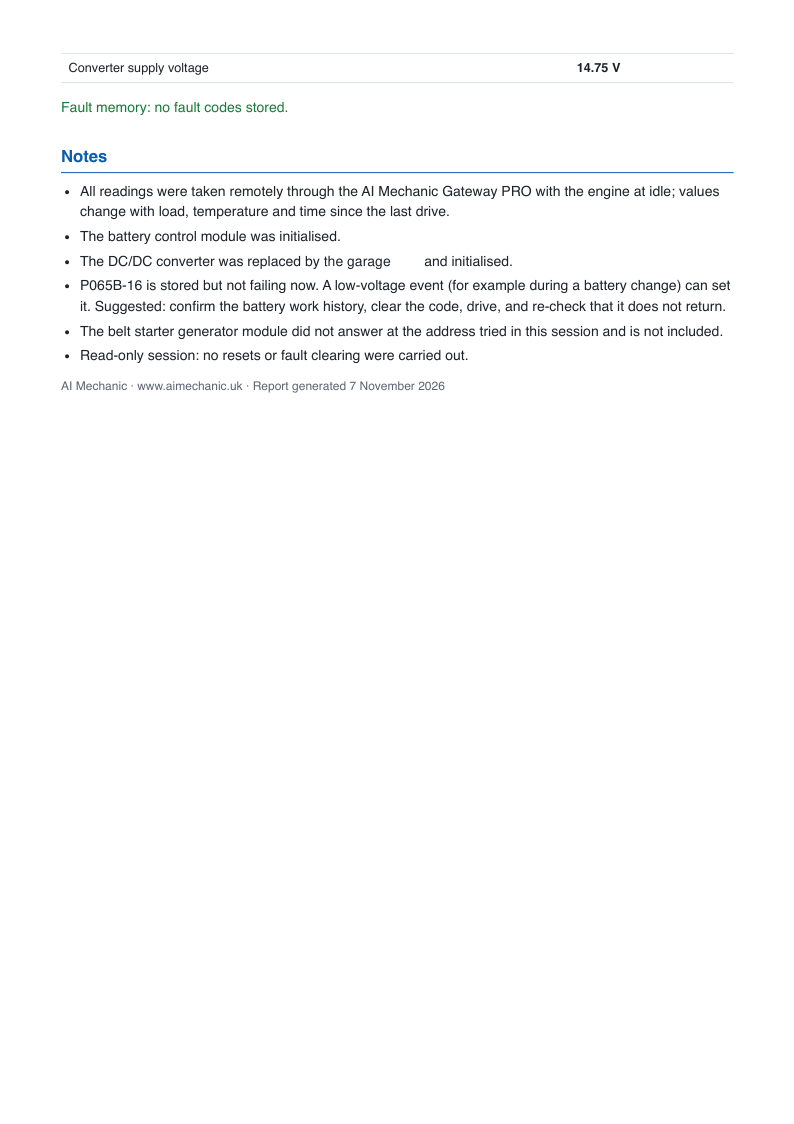
Vehicle identity and the garage's name removed. The report is shown as it was written on the day, from values read at idle. It is a health report, not a fault diagnosis.