Real job 19 November 2026 · Mercedes Vito, 2019
A week of searching. One recorded drive.
A van that kept losing power after its turbos were reconditioned. One 30-minute drive, recorded from miles away, showed where to look. The garage then confirmed it by hand on the van.
Fault code
- P300A6DBoost pressure too lowstored on the recorded drive
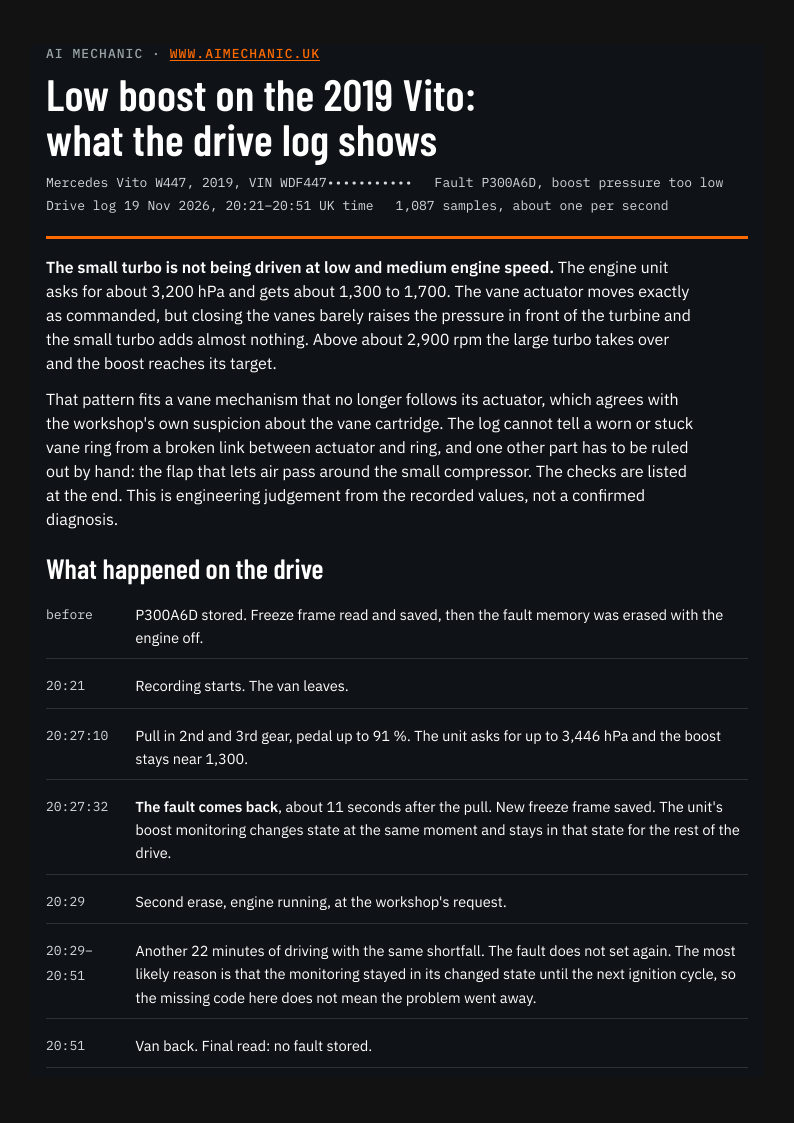
- 1,087readings on one drive, about one a second
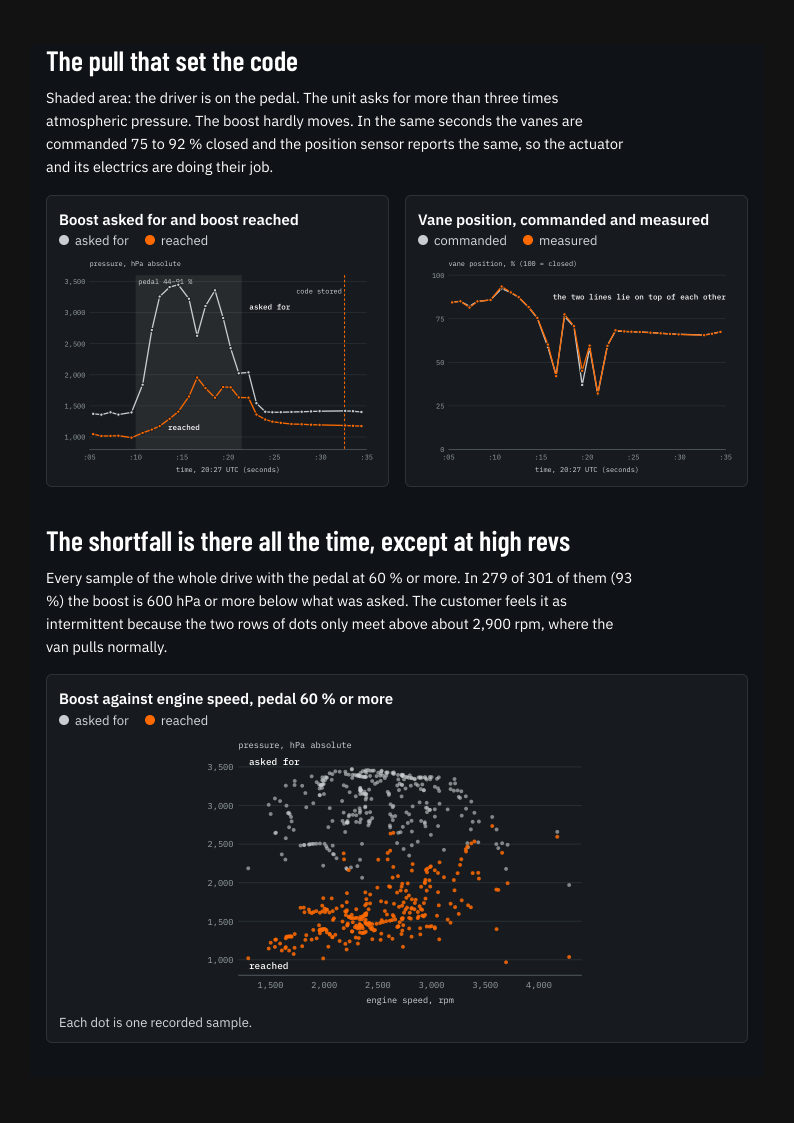
- 93 %of the readings under hard throttle fell 600 hPa or more short of the boost the engine asked for
- 8other suspects checked against the recording, from boost leak to fuel supply
The fault.
A 2019 Mercedes Vito kept losing power and logging "boost pressure too low". The turbos had already been reconditioned, and the fault was still there. The driver felt it come and go, which is the hardest kind of fault to catch on a ramp.
A week of searching.
The garage did the sensible things. The turbo pipes were checked. The engine control unit software was updated. About a week went by, with hours and money going into the van, and the fault stayed.
One recorded drive.
The garage plugged a Gateway PRO into the van. John joined from miles away and ran the session live, with DEX working in the background. The van went out for one ordinary 30-minute drive while the engine's own readings were recorded about once a second. Nothing was changed on the van apart from two fault memory erases the garage asked for.
What the numbers said.
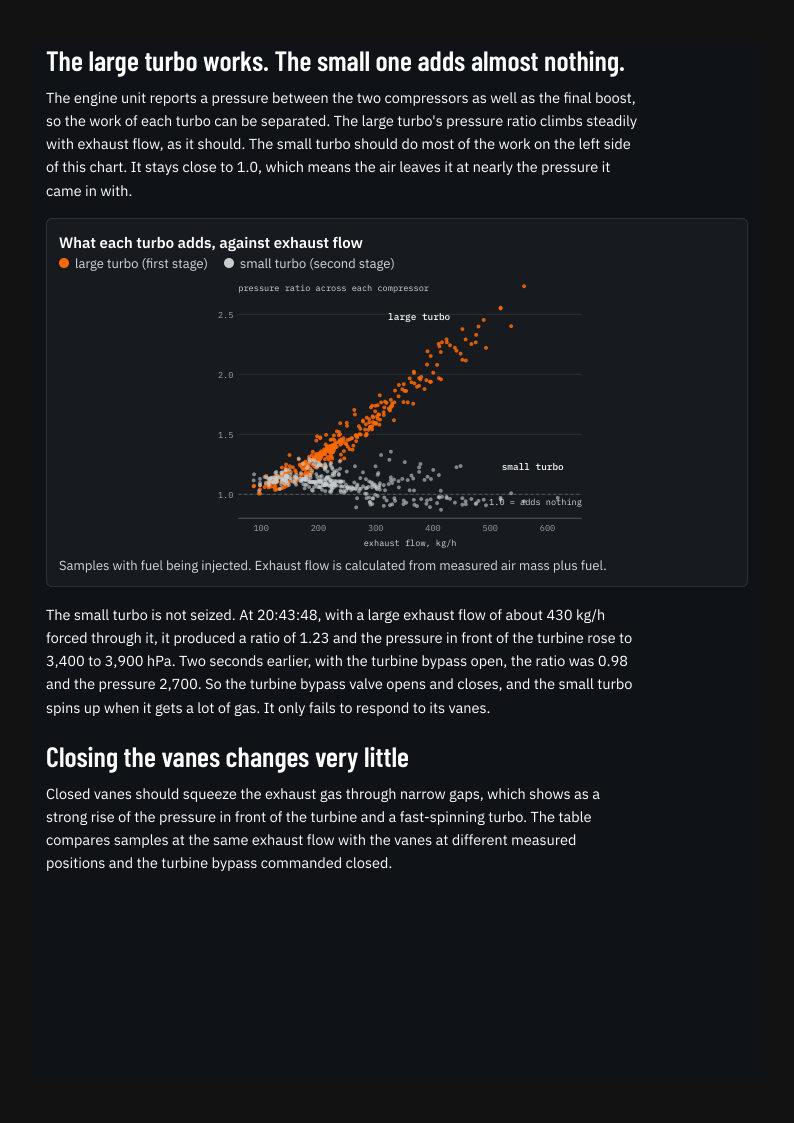
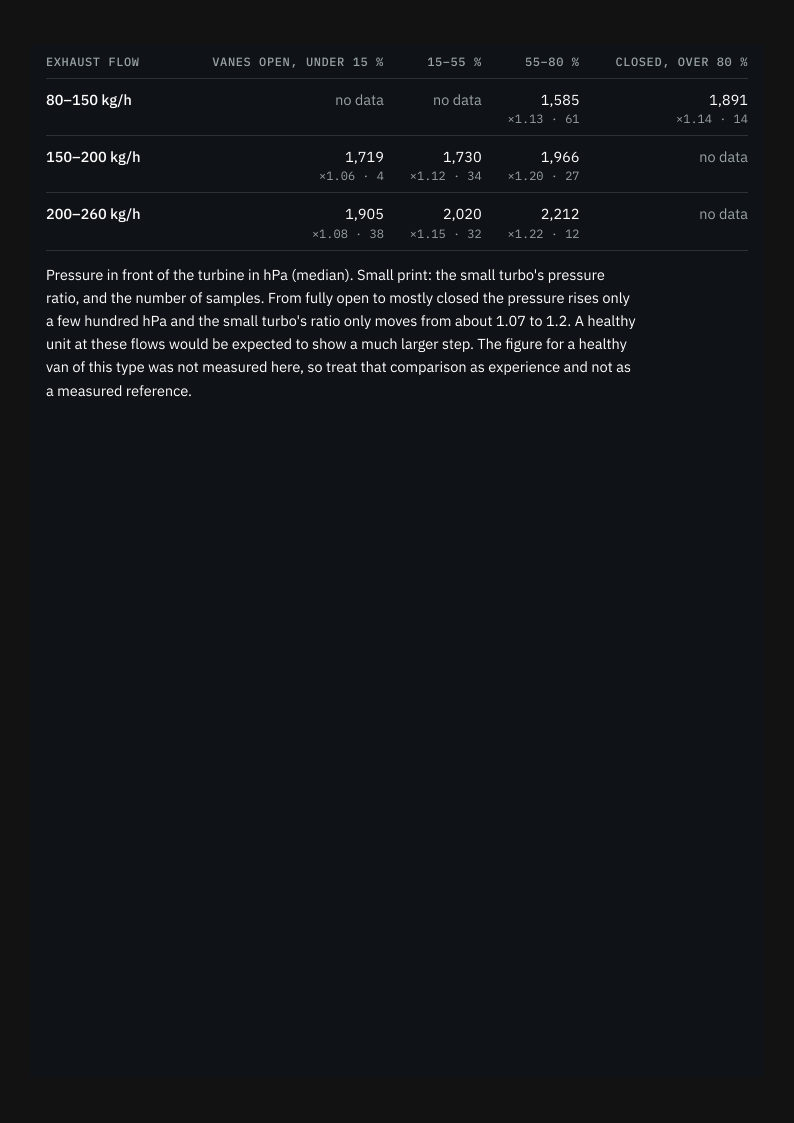
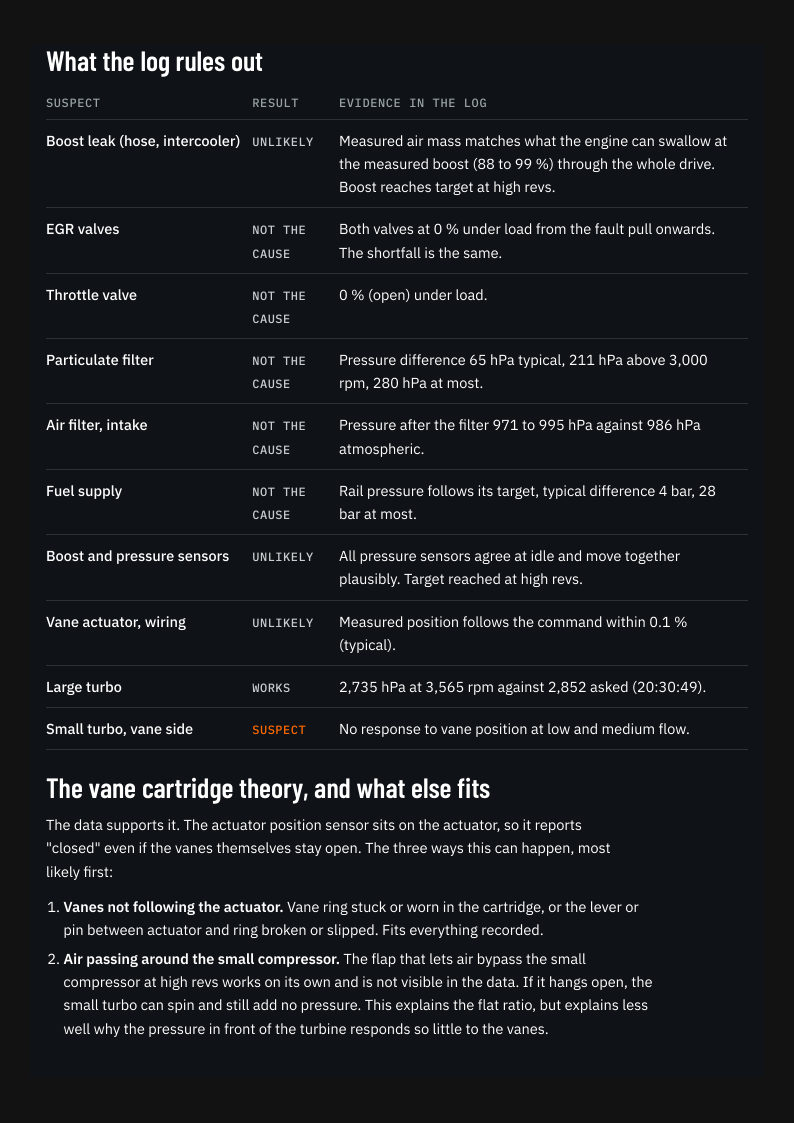
Under hard throttle the engine asked for about 3,200 hPa of boost and got 1,300 to 1,700. The vane actuator moved exactly as commanded, yet closing the vanes barely changed anything, and the small turbo added almost nothing. Above about 2,900 rpm the large turbo took over and the van pulled normally, which is why the fault felt intermittent. Inside the hour the recording pointed at one place: the vane mechanism of the small turbo.
What it ruled out.
The same recording was checked against eight other suspects: boost leak, EGR valves, throttle valve, particulate filter, air filter, fuel supply, the pressure sensors, and the vane actuator with its wiring. None of them fitted. The large turbo was shown working.
Confirmed on the van.
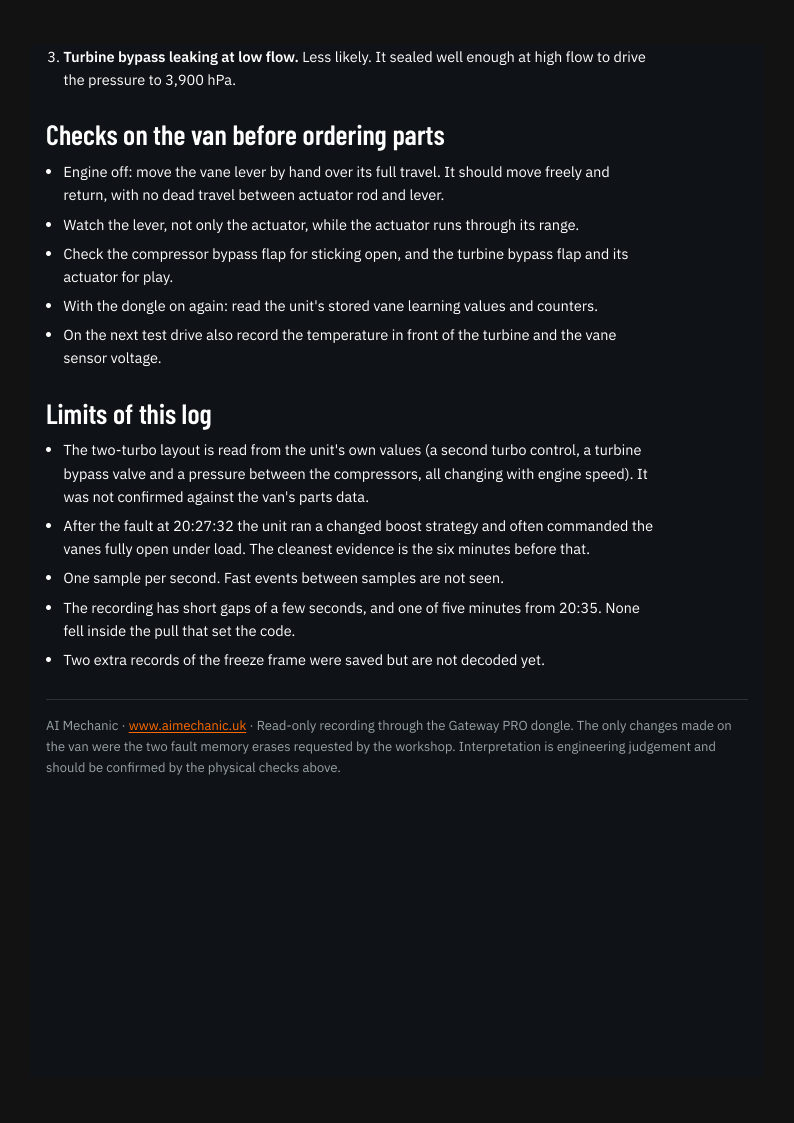
A recording can point. Only hands on the van can confirm. The report ended with a short list of checks for the garage, and the garage checked the van by hand and confirmed the vane mechanism.
Who did what.
- The specialist, JohnMore than twenty years in automotive electronics. Ran the session live with DEX in the background, chose the test and read the result.
- DEXWorked in the background: recorded every reading, lined up what the engine asked for against what it got, and drew the charts.
- The garageKept the van on its ramp, checked the vane mechanism by hand and confirmed the finding.
The report, all six pages.
Vehicle identity removed. The report is shown as it was written on the day, as engineering judgement from the recorded values, before the garage confirmed the finding by hand. This is one job. Every fault is different, and a recorded drive does not find every one of them.