EV Range Anxiety: The Reality Check With Real UK Data
Is EV range anxiety still justified in 2026? We analyse real UK driving data, charging infrastructure growth, and practical range from popular EVs to find out.
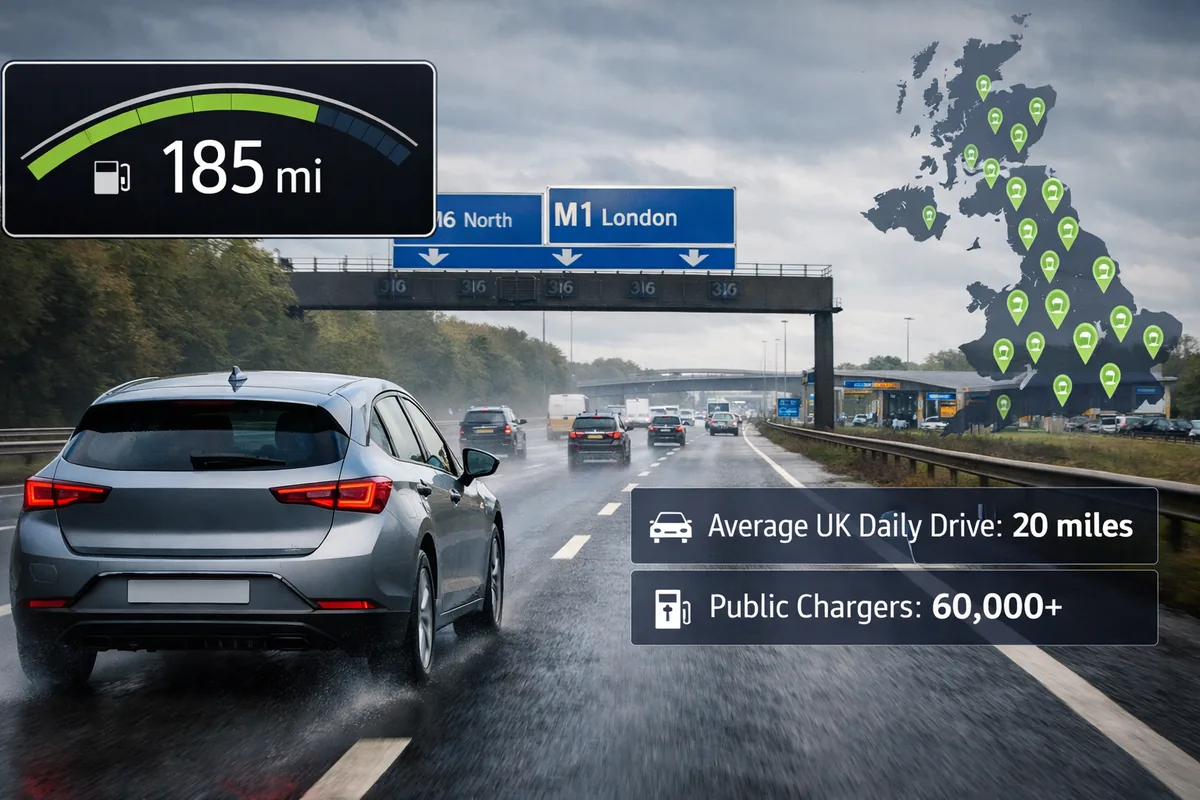
Range anxiety — the fear that your electric car will run out of charge before reaching your destination — remains the number one concern preventing UK drivers from going electric. But is it still justified in 2026? Let's look at the actual data.
How Far Do UK Drivers Actually Drive?
According to the DfT's National Travel Survey, the average UK car journey is just 8.4 miles. The average daily driving distance is 20 miles. Even on the busiest days, 99% of UK drivers cover less than 100 miles.
Now consider that even the cheapest used EVs offer 100+ miles of real-world range. The disconnect between fear and reality is enormous.
Real-World Range vs WLTP Claims
WLTP figures are tested in lab conditions. Real-world range depends on speed, temperature, terrain, and driving style. Here's what popular UK EVs actually deliver:
| Vehicle | WLTP Range | Real Summer | Real Winter | 70mph Motorway |
|---|---|---|---|---|
| Nissan Leaf 40kWh | 168 mi | 140 mi | 100 mi | 90 mi |
| MG4 Standard | 218 mi | 185 mi | 130 mi | 120 mi |
| Tesla Model 3 SR+ | 272 mi | 230 mi | 170 mi | 160 mi |
| Hyundai Ioniq 5 LR | 315 mi | 270 mi | 200 mi | 185 mi |
| Tesla Model 3 LR | 374 mi | 310 mi | 240 mi | 220 mi |
Winter range drops 20-30% due to battery heating, cabin heating, and cold-weather chemistry. This is the biggest real-world consideration.
UK Charging Infrastructure in 2026
The UK now has over 60,000 public charge points across more than 30,000 locations. This includes:
- Rapid chargers (50kW+): 15,000+ devices. Average spacing on motorways: every 25 miles.
- Ultra-rapid (150-350kW): 5,000+ devices. Growing fastest.
- Tesla Superchargers: 1,200+ stalls, now open to non-Tesla EVs.
- Destination chargers (7-22kW): 40,000+ at hotels, supermarkets, car parks.
For context, the UK has around 8,000 traditional petrol stations. The charging network is rapidly approaching parity.
The 95% Rule
Here's the reality: 95% of your driving will be covered by overnight home charging. You plug in when you get home, wake up to a full charge, and never think about it again. It's actually more convenient than petrol — no detours to a petrol station.
The other 5% — long motorway trips — requires a 20-30 minute charging stop every 150-200 miles. With 800V vehicles like the Ioniq 5 or EV6, you can add 200 miles of range in under 20 minutes.
When Range Anxiety IS Justified
To be fair, there are situations where concern is warranted:
- No home charging — If you can't charge at home or work, EV ownership is still harder. Public charging costs 3-4x more than home electricity.
- Regular 200+ mile days — Delivery drivers, sales reps, and similar roles need careful route planning or a longer-range EV.
- Degraded batteries — A 7-year-old Nissan Leaf with 70% battery health has just 100 miles of summer range. Always check battery health before buying used.
- Towing — EVs lose 30-50% range when towing. If you regularly tow, you need a large battery (80kWh+).
The Verdict
For the vast majority of UK drivers, range anxiety is no longer justified. Modern EVs with 200+ miles of real-world range, combined with 60,000+ public chargers and overnight home charging, mean that running out of charge requires genuine effort (or negligence).
The one legitimate concern is buying a used EV with a degraded battery. That's why we built our EV Intelligence Report — so you can check battery health, real-world range estimates, and degradation forecasts before you buy. For £14.99, it's the cheapest insurance against a £15,000 battery replacement bill.
Written by
AI Mechanic Team
25+ years of real-world automotive diagnostic experience. Covering fault code analysis, MOT preparation, vehicle checks, and modern vehicle technology across the UK.