EV Battery Health: What Every Used Car Buyer Needs to Know
The complete UK guide to understanding EV battery health before buying a used electric car. Learn what State of Health means, how to check it, and what percentages are acceptable.
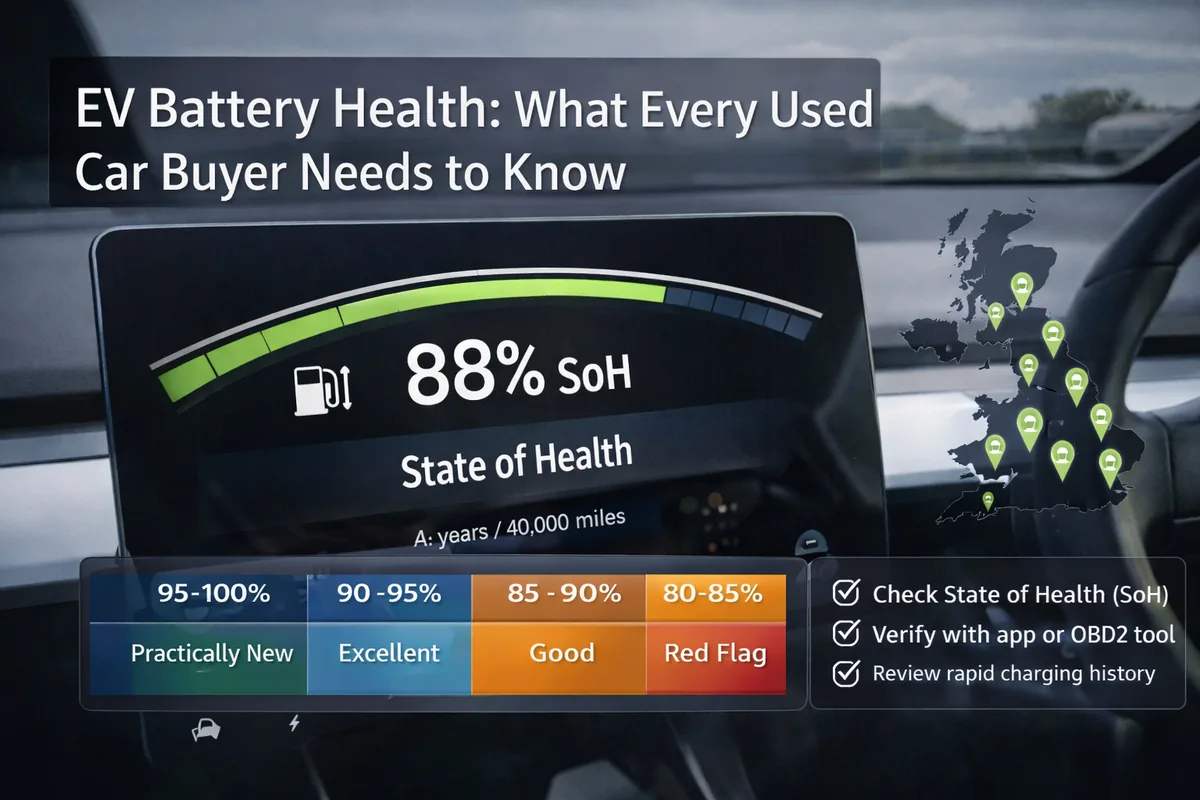
Buying a used electric car in 2026 is one of the smartest financial moves you can make — but only if the battery is healthy. Unlike a petrol engine where you can listen for knocks or check the oil, EV battery health is invisible. A Tesla Model 3 with 85% battery health and one with 70% look identical on the outside, but the difference in value and usability is enormous.
This guide explains everything UK used car buyers need to know about EV battery health before committing to a purchase.
What Is Battery State of Health (SoH)?
State of Health (SoH) is the headline figure for any EV battery. Expressed as a percentage of original capacity, it tells you how much energy the battery can still hold compared to when it was new.
- 95-100% SoH — Practically new. Expected for vehicles under 2 years old with normal use.
- 90-95% SoH — Excellent. Most 2-4 year old EVs sit here. Negligible impact on daily driving.
- 85-90% SoH — Good. Typical for 4-6 year old vehicles. You might notice slightly reduced range in winter.
- 80-85% SoH — Acceptable. Common in 6-8 year old EVs. Range reduction becomes noticeable on longer journeys.
- Below 80% SoH — Below most manufacturer warranty thresholds. Factor in potential battery replacement costs.
Why Battery Health Matters More Than Mileage
With petrol and diesel cars, mileage is the primary indicator of wear. With EVs, it's more nuanced. A Nissan Leaf with 40,000 miles that was regularly rapid-charged in hot weather could have worse battery health than one with 80,000 miles that was always slow-charged at home.
The factors that affect EV battery degradation include:
- Charging habits — Frequent DC rapid charging (50kW+) accelerates degradation compared to 7kW home charging
- Depth of discharge — Regularly running to 0% or charging to 100% stresses the cells more than keeping between 20-80%
- Climate — UK temperatures are actually quite kind to EV batteries. Vehicles imported from hotter climates may have worse health.
- Thermal management — Active liquid cooling (Tesla, Hyundai, BMW) preserves batteries far better than passive air cooling (early Nissan Leaf)
- Calendar age — Batteries degrade even when not used, losing roughly 1-2% per year just from existing
How to Check Battery Health Before Buying
1. AI-Powered Battery Check (Fastest)
Services like AI Mechanic's EV Intelligence Report can estimate battery health, degradation patterns, and real-world range for just £14.99 — no physical access to the vehicle needed. This is ideal for shortlisting vehicles before committing to a viewing.
2. OBD2 Diagnostic Apps
Apps like LeafSpy (Nissan), ABRP, or Teslascope can read battery data directly via an OBD2 dongle (£15-£30). This gives you exact SoH readings but requires physical access to the vehicle.
3. Main Dealer Battery Health Certificate
Most EV manufacturers offer official battery health certificates. Tesla provides this through the app, Nissan through dealers, and BMW through Connected Drive. Costs vary from free to £100+.
4. Independent EV Specialist Inspection
Companies like BCA (£226+VAT) or RAC (£267) offer physical inspections. Thorough but expensive — best reserved for the final vehicle you plan to purchase.
What Battery Health Percentage Should You Accept?
This depends on your needs and budget:
- Daily commuter (under 50 miles/day) — 80%+ SoH is fine. Even a degraded 40kWh battery gives 100+ miles of real-world range.
- Regular longer trips — Aim for 85%+ SoH. You want enough buffer for motorway driving in winter.
- Primary family car — 90%+ SoH recommended. You want reliability and range confidence.
Red Flags to Watch For
- SoH below 80% on a vehicle less than 8 years old (should still be under warranty)
- Rapid drop in SoH compared to similar age/mileage vehicles
- Multiple owner history with no service records (may indicate abuse)
- Vehicles imported from hot climates (Middle East, Southern Europe)
- Vehicles used as taxis or rental cars (high rapid charging frequency)
The Bottom Line
Battery health is the single most important factor when buying a used EV. A £14.99 battery health check could save you £15,000 in unexpected replacement costs. Always check before you buy.
Written by
AI Mechanic Team
25+ years of real-world automotive diagnostic experience. Covering fault code analysis, MOT preparation, vehicle checks, and modern vehicle technology across the UK.